Blood Pressure Management
What is High Blood Pressure?
Blood pressure is the force of your blood pushing against the walls of your arteries as your heart pumps. When that pressure stays too high over time, it is called high blood pressure, or hypertension.
High blood pressure often has no noticeable symptoms. Because of this, it is sometimes called the “silent killer.” Nearly half of adults in the U.S. have high blood pressure, and many do not know it. That is why regular blood pressure checks are so important.
Risk Factors and Why It Matters
Some people are more likely to develop high blood pressure than others. Risk factors fall into two groups:
-
Factors you can control, such as diet, physical activity, stress, and smoking
-
Factors you cannot control, such as age and family history
Managing blood pressure matters because untreated high blood pressure can lead to serious health problems over time, including:
-
Stroke
-
Vision loss
-
Heart attack or heart failure
-
Kidney disease
-
Sexual dysfunction
Early detection and treatment can greatly reduce these risks.
Risk factors that CAN be controlled
- Cigarette smoking or exposure to secondhand smoke
- Diabetes
- Being obese or overweight
- High cholesterol
- Unhealthy diet (high sodium, low in potassium, drinking too much alcohol)
- Physical inactivity
Risk factors that CANNOT be controlled
- Family history of high blood pressure
- Race/ethnicity
- Increasing age
- Gender (males)
- Chronic kidney disease
- Obstructive sleep apnea
Frequently Asked Questions
How can I tell if I have high blood pressure?
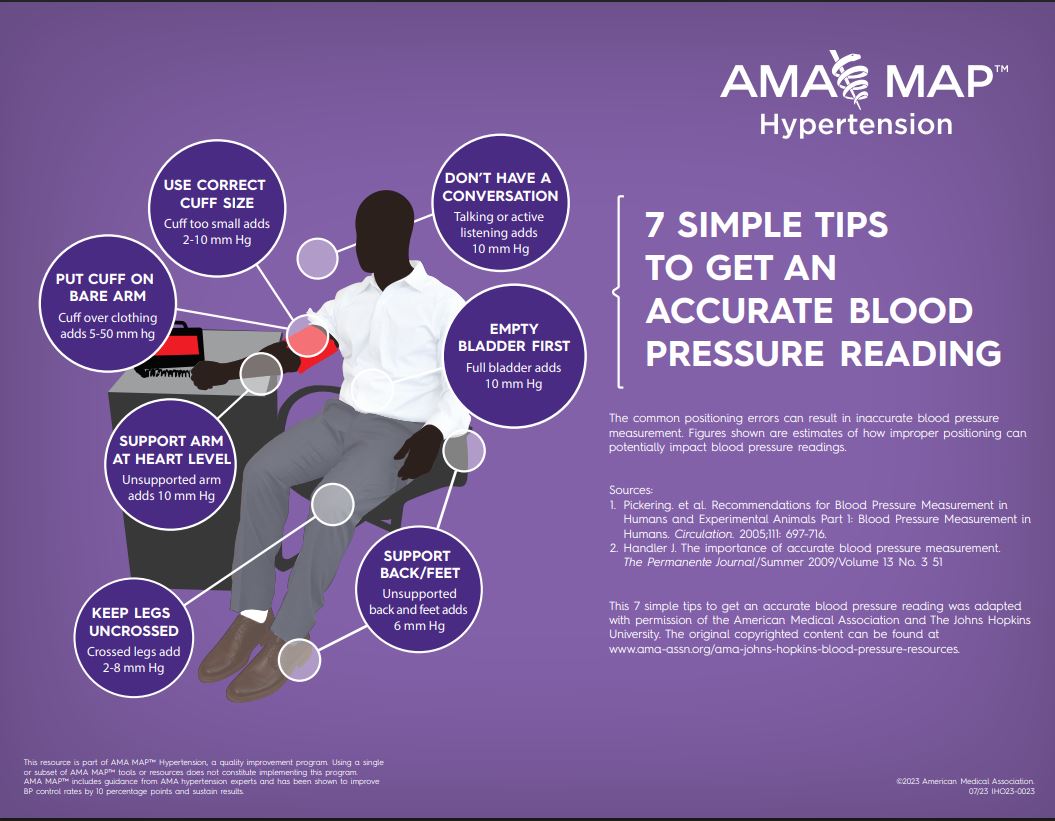
The only reliable way to know if you have high blood pressure is to check it regularly. Because high blood pressure usually does not cause symptoms, you cannot feel when it is high. Accurate readings matter, and how you prepare and sit can affect the numbers.
To get the most accurate blood pressure reading, follow these steps:
Prepare
-
Avoid caffeine, nicotine, and exercise for at least 30 minutes before checking your blood pressure.
-
Use the bathroom first. A full bladder can raise your reading.
Position
-
Use the correct cuff size for your arm. A cuff that is too small or too large can give inaccurate results.
-
Place the cuff on bare skin, not over clothing.
Measure
-
Sit upright with your back supported and both feet flat on the floor.
-
Rest your arm on a table or surface so it is level with your heart.
-
Stay still and relaxed while the measurement is taken.
Checking your blood pressure the right way helps ensure the numbers truly reflect your health.
How can I reduce high blood pressure?
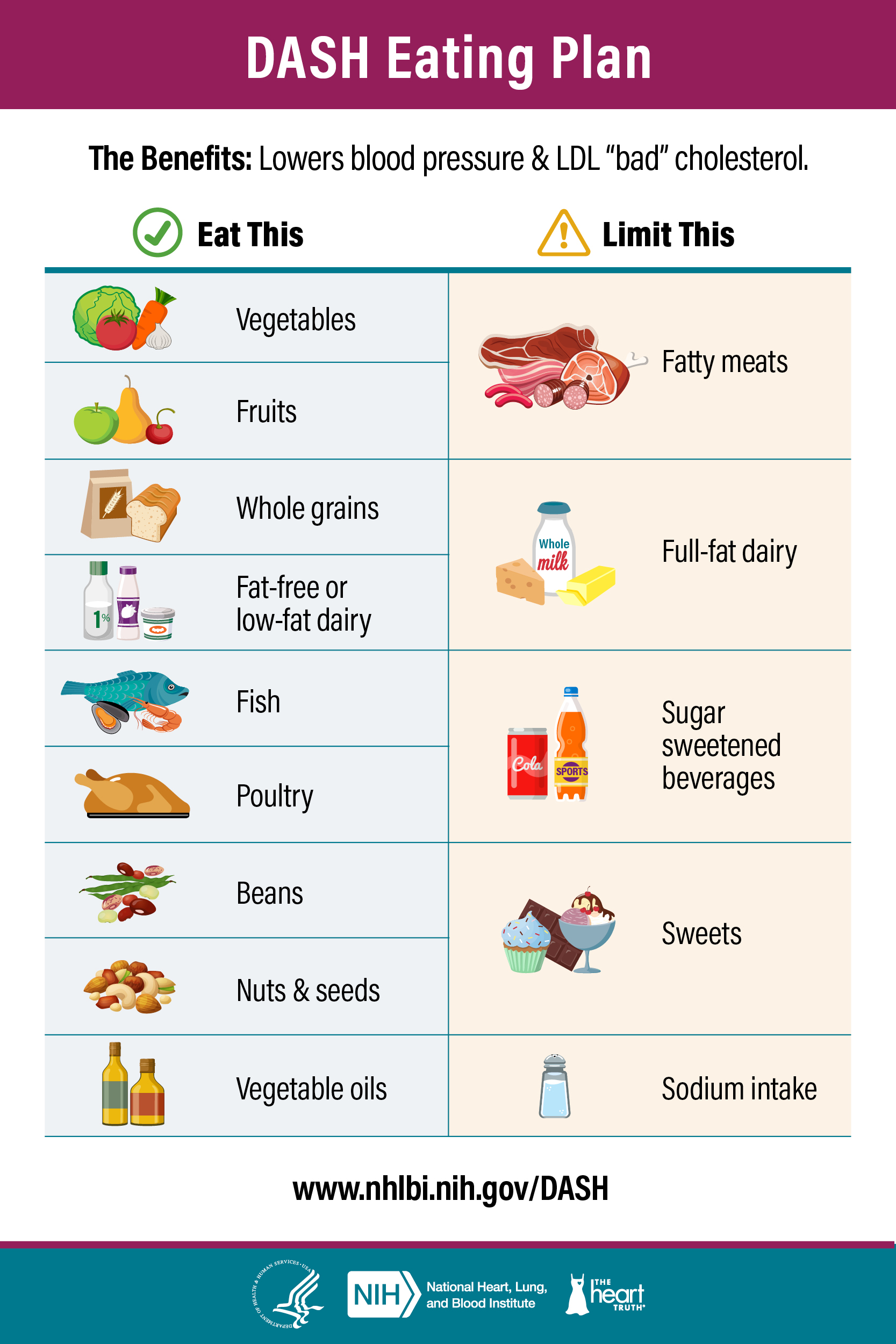
For many people, healthy lifestyle changes are the first and most important step in preventing or lowering high blood pressure. The American Heart Association’s Life’s Essential 8™ is a helpful framework that highlights the key habits that support long-term heart health, such as healthy eating, regular physical activity, good sleep, and managing stress.
For some patients, lifestyle changes alone are not enough. In these cases, blood pressure medications can be lifesaving and very effective.
If you are prescribed medication, keep these important points in mind:
Take It Consistently
Take your medication every day exactly as prescribed, even when your blood pressure readings look normal. Normal readings mean the medication is doing its job, not that high blood pressure has gone away.
Talk About Side Effects
Most people tolerate blood pressure medications well, but side effects can happen. If side effects make it hard to take your medication consistently, contact your doctor. There are often other options or adjustments that can help.
Combining healthy daily habits with the right treatment plan gives you the best chance to control your blood pressure and protect your long-term health.